P92 · Packing and covering · Classic · Hard

Sum of radii in the unit circle · n = 11

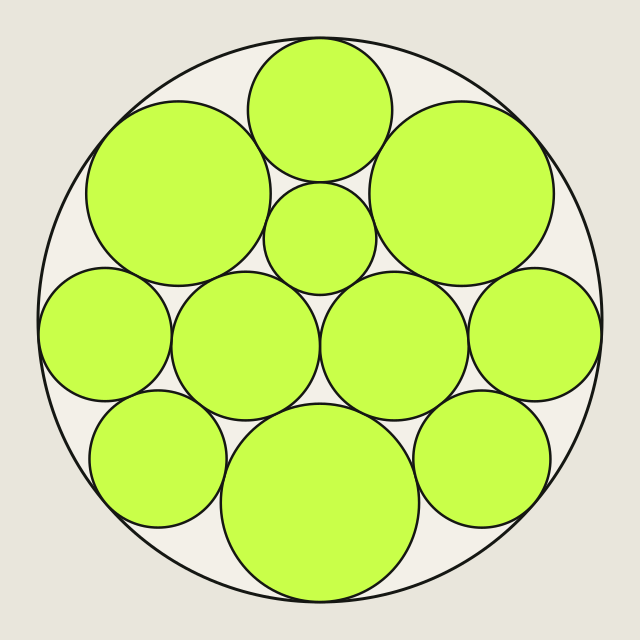
Place n non-overlapping circles inside a circle of radius 1, each with its own radius, making the sum of the radii as large as possible.

Instancen = 11
ObjectiveMaximize the sum of the radii

Record comparison

the sum of the radii · Higher is better
RecordValue / intervalAuthor / holderSource
External best known[2.947, 2.948]See source attributionErich Friedman ↗
Site recordNo player record yet——

Formal definition

  • ContainerThe closed disc of radius 1 centred at (1, 1); a circle may touch the boundary
  • SubmissionExactly n circles, each [x, y, r] with r > 0, every number to at most nine decimals
  • ConstraintsEvery circle lies inside the disc, (x − 1)² + (y − 1)² ≤ (1 − r)², and no two interiors meet: the distance between centres is at least the sum of the radii. All checked exactly in integers; touching is allowed
  • ScoreThe sum of the radii, an exact integer sum shown to nine decimals; larger is betterS=Σr
  • ObjectiveMaximise the sum of the radii over every legal arrangementmaxSΣr
Open the full editor ↗

Layout shown: starter layout

2y0
0x2
VERIFIED CONSTRUCTIONscored by the sum of the radii

Getting a feel for it

Where the room for improvement is

As in the square, equal circles are among the worst strategies: one large circle near the centre, or a ring of large ones, with small circles tucked into the gaps between them and the rim. A disc has no corners, so the big circle in a corner becomes a ring along the rim, and the trade of sizes plays out in a different geometry.

Where the frontier is

Erich Friedman's maximum-total-perimeter table runs to n = 50: n ≤ 4 and 6–10 are closed-form arrangements by Elser and Cantrell, n = 5 was improved by Haowei Lin in July 2026, and n = 33–50 were added by Jonathan Viquerat in September 2026. The table is still being rewritten and no row carries an optimality proof; the site exhibits the pictured arrangements, reconstructed and verified exactly.

Source
The current arrangement for Sum of radii in the unit circle n = 11
LAYOUT & HISTORY

Starter layout

Inspect the layout, solver notes and record history.

Challenge this record ↗Submit a proof / idea ↓Share a proof or idea in the discussion. Accepted contributions can earn proof points.
ANSWER FORMAT

How to write your answer

The container is the disc of radius 1 centred at (1, 1), so every coordinate lies in [0, 2] and none is negative. Coordinates and radii share one unit and are written as plain decimals, to at most nine places.

Submit circles: exactly n triples [x, y, r], every number a decimal string of at most nine places such as "0.25". The container is the closed disc of radius 1 centred at (1, 1).

Starter answer

{
  "circles": [
    [
      "0.999810377",
      "0.351607491",
      "0.351607463"
    ],
    [
      "1.502242979",
      "1.447838563",
      "0.327090356"
    ],
    [
      "0.498019087",
      "1.448132281",
      "0.327090363"
    ],
    [
      "1.263623343",
      "0.907435655",
      "0.263650392"
    ],
    [
      "0.736322577",
      "0.907589875",
      "0.263650395"
    ],
    [
      "1.000217658",
      "1.744144047",
      "0.255855920"
    ],
    [
      "0.425703003",
      "0.507095580",
      "0.243183107"
    ],
    [
      "1.574008596",
      "0.506759744",
      "0.243183101"
    ],
    [
      "1.761927307",
      "0.947875070",
      "0.236291790"
    ],
    [
      "0.238042342",
      "0.948320763",
      "0.236291798"
    ],
    [
      "1.000084409",
      "1.288566593",
      "0.199721553"
    ]
  ]
}
Submission format and technical detailsOpen this when you are ready to prepare a JSON answer+

Instance parameters

{
  "n": 11
}

Starter answer

{
  "circles": [
    [
      "0.999810377",
      "0.351607491",
      "0.351607463"
    ],
    [
      "1.502242979",
      "1.447838563",
      "0.327090356"
    ],
    [
      "0.498019087",
      "1.448132281",
      "0.327090363"
    ],
    [
      "1.263623343",
      "0.907435655",
      "0.263650392"
    ],
    [
      "0.736322577",
      "0.907589875",
      "0.263650395"
    ],
    [
      "1.000217658",
      "1.744144047",
      "0.255855920"
    ],
    [
      "0.425703003",
      "0.507095580",
      "0.243183107"
    ],
    [
      "1.574008596",
      "0.506759744",
      "0.243183101"
    ],
    [
      "1.761927307",
      "0.947875070",
      "0.236291790"
    ],
    [
      "0.238042342",
      "0.948320763",
      "0.236291798"
    ],
    [
      "1.000084409",
      "1.288566593",
      "0.199721553"
    ]
  ]
}

Submit circles: exactly n triples [x, y, r], every number a decimal string of at most nine places such as "0.25". The container is the closed disc of radius 1 centred at (1, 1). · Verifier v1.0.0

DISCUSSION

Discussion

Talk strategy, share methods, ask why you are stuck. Every signed-in user can post. Posts carry your public byline, the same name your records use; the #number after it is the account's signup ordinal, so a name cannot be worn by someone else. New posts appear after an automated review.